Under One Roof Music Festival – April 24-26 – Benefit NC Artists
| |||||||||||||||||
|
| |||||||||||||||||
|
Come hear live music at another WHUP Pass the Hat concert. Link: Facebook
Hi Folks!
I hope everyone is staying healthy in this difficult time. Nora and I are safe and sound, and tonight I will be performing my first virtual concert of the quarantine on YouTube. It will be live at 7:00 PM Central Time this evening (April 14th).
Where to watch:
Bring your popcorn, tomatoes, settle in with the family for some instrumental guitar and hang out.
The concert is completely free, but If you would like to make a donation you can do so with paypal at paypal.me/markkroos or venmo @markkroos. There is absolutely no obligation or expectation, but any and all donations are welcome and appreciated.
About the concert:
A few weeks ago, my friend Charles Grawe in the Twin Cities asked if I would do a “virtual home concert.” Charles has brought me in for a few concerts when I’ve toured through Minnesota in the past, both at his house and at his church. Initially, I thought he wanted to do something like a house concert on facetime with a small group, but Charles wanted to open it up to everyone. So in honor of Charles, I’ve made this a concert specifically geared toward the Northern Plains; the “Minnesota Quarantine Concert” if you will. Everyone is welcome, just don’t be surprised if we bring up things like hot dish, Juicy Lucies, Ice fishin’, Taco John’s, great big mosquitoes…ya know, Minnesota things!
The concert will likely go about 45 minutes, but I’ll probably hang around and do some Q&A afterwards.
I hope to see you there!
Much love,
Mark Kroos
markkroos.com
Tune in tonight (April 14th) for my “Gig From Home” with reverb.com at 7 PM CST – I’ll play my new album ‘25 Trips’ from start to finish (solo) with some stories!
Reprinted from Hold The Note Magazine (www.htnmag.com)
Is there a name for the feeling you get when you hear a favorite song for the first time? Seriously, I\’d love to know. It\’s one of my favorite feelings-getting lost in the notes, not knowing what comes next, but feeling the song pull on you, and work its way through you and back out, leaving a bit of itself there, forever. It may sound flowery, but I don\’t care. I love the way that feels.
I absolutely love live music. I love seeing national acts as well as local ones. I love learning about music, and seeing the way notes can be arranged in ways no one has ever thought of, before (you\’d think we\’d run out of ways to arrange notes). We\’re so lucky to be a part of a community that has so many options for music lovers, and I think we could help our community to grow even stronger if we supported them, all-out.
Why should we support our local music community? I made a list of some of the \”whys\”:
1) Discovering new favorite music. That feeling we were talking about, above? The one where you hear your favorite songs for the first time? You can do that in real life, right here at your own local shows. We are surrounded by so much talent. Imagine finding out your new favorite song was written by someone who lives down the street from you.
2) On that \”note\” (Haha…I know…): Connecting with your community, as a whole. When you go to local shows, you meet people who (often) live nearby, and like the same music as you. New, instant friends!
3) You support local businesses when you support local music. By going to local shows, you\’re often not just supporting local music. You\’re also supporting local bars and venues, sometimes local breweries and farms (depending on the menu), and even local printer/screen printers and photographers/publications (like me and Hold the Note). If you want to support a whole bunch of local, go to local shows!
4) That being said: Local shows are also often a low-cost night out. The local shows I\’ve seen are often 20.00 or less-and sometimes free!
5) They\’re more personal. Don\’t get me wrong. I enjoy a good arena show from time to time. But when you visit local pubs and show spots, there\’s a level of intimacy that you can\’t find at those events attended by thousands of fans. Often, you can get really close to the stage. But even when you can\’t, you\’re usually not very far from the action.
6) I bet you can meet the band. Another perk of smaller, local shows is you often can talk with the artists that are performing, that night. You might see them wandering around the space, and/or even running their own merchandise tables. Usually, local artists are really excited to talk with their fans and take pictures with them, too.
7) You can say you knew them, back when. Every band and solo artist, no matter how big they are today, started out as a local act. By getting to know the talent in your town, you can be one of the cool kids that knew a band when they were just starting out. Imagine the stories you can share.
8) By supporting our local music community and helping it grow, we\’re potentially showing our school systems that music education matters. I often hear people saying how much they wish the music and arts programs weren\’t being cut from schools. Showing our community that music is worth supporting can set an example for programming considerations. Let\’s show them that music is being supported and is appreciated…and is a necessary part of our community.
9) We can encourage our neighbors to follow their musical goals. Think about this, too: there\’s a lot to be said for musicians who bust their behinds to gain national (and international) success. But they don\’t have to be from, or even live in Nashville or Los Angeles or New York to make that happen (especially with the gifts of the interwebs). By getting out there and supporting our local music scene, we\’re reinforcing that you can live right here in our town, and launch a music career.
10) Find more music, continue the cycle. Going to local shows, you often get to hear other local acts, fall in love with more music, share it with friends, and repeat.
What do you think? Does this list give you a reason to check out local music? I\’d love to hear your feedback, and any other suggestions you might have as to why it\’s great to support our local music. And truly, if you know what the name of that feeling is, please let me know. And the next time I see you out at a local show, I\’ll buy you a beer.
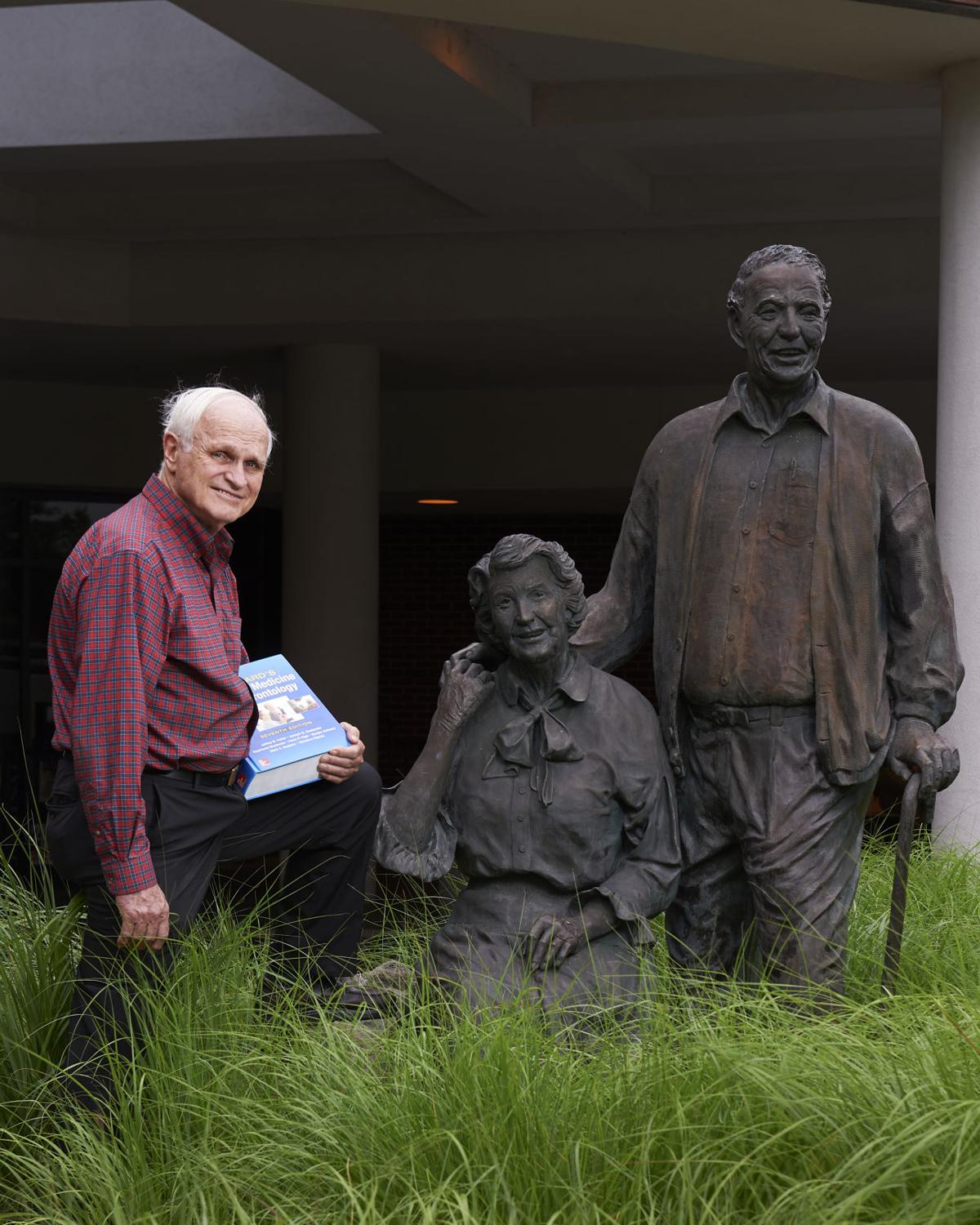
In the Winston-Salem Journal’s SPARK Magazine
August 17, 2018
By Emily B. Harris
 We’re proud to announce the winners of the second annual 7 Over Seventy awards — Lynn Eisenberg, Mildred Griffin, Paul Fulton Jr., Bill Hazzard, Billie Marie Matthews, Don McMillan and John Woodmansee. Sponsored by Wake Forest Baptist Health Sticht Center for Healthy Aging and Alzheimer’s Prevention, Senior Services, SPARK magazine, and the Winston-Salem Journal, these awards honor outstanding members of our community who have made it a better place by generously giving their time and efforts to help others. This year’s honorees include dynamic physicians, educators and business people, each with a unique history of accomplishments. Together, they share a common thread: an emphasis on the importance of giving back to the community.
“You’ve already lived longer than you expected to, so appreciation and gratitude are what it’s all about.” – Dr. Bill Hazzard
An advocate for the aging, Bill Hazzard stresses the importance of helping the elderly. Dr. William “Bill” Hazzard is in Winston-Salem because of the Sticht Center for Healthy Aging and Alzheimer’s Prevention at WFU, which he helped create. Hazzard, who is a pioneer in geriatric medicine and gerontology, says every day is about learning.
“From my experience, I’d say find something you love and share it with others you love and respect,” he says.
Hazzard had similar centers at the University of Washington and Johns Hopkins. “I came to Wake Forest in 1985,” he says, explaining that he’d figured out a better way to run the program based on what he had learned in Seattle and Baltimore. “I took a full year to decide what I would do at Wake Forest.” He made 13 trips in that year, always to negotiate so he would have resources. It was the third time Hazzard would create an aging center but this one, he says, had not been tried anywhere else at that point.
“Not only do we have this nice building, but getting the commitment of the building and getting the buy-in through time (it took 15 years) and so I think we’re ready for it here. But it could go away very quickly if we don’t keep feeding it and keep winning grants and support of the community. It’s very frail,” he warns.
The frailty may stem from ageism. “People don’t care for older people,” he says. “They don’t like to pay for the care for older people and yet we’ve got this huge number of older people who are filling up our population in this age wave and we need to do it.”
The center is not Hazzard’s only passion.
“Songs are on my mind 24 hours a day, literally,” he says. He has sung with The Sherwoods of Cornell, a triple-quartet of college friends, for 60 years. He also walked on and played varsity soccer at Cornell, despite never playing as a child.
Hazzard, who has two sons, two daughters and 11 grandchildren, enjoys family time, birds and music.
“If you are healthy and active, stay that way,” he says, his tone clinical and sincere. “There’s nothing magical about 70 or even 80 as long as you are healthy enough to enjoy it. I’ve gotten interested in the concept of new-old age. And new-old age is about not only giving back but continuing to do so for the rest of your life. You’ve already lived longer than you expected to, so appreciation and gratitude is what it’s all about. There’s no reason to stop.”
To see the entire article, click on the following link: https://www.journalnow.com/spark/over-seventy/article_1704d8c6-a236-11e8-b6b5-a7cd5f70a611.html
The Fiddle and Bow Society will conduct its annual membership meeting (required by our by-laws) just prior to Jim Lauderdale concert on Friday, November 1st at 7:15 pm.
The tentative agenda will include:
Please stop by a little bit before the concert to attend. Thank you.
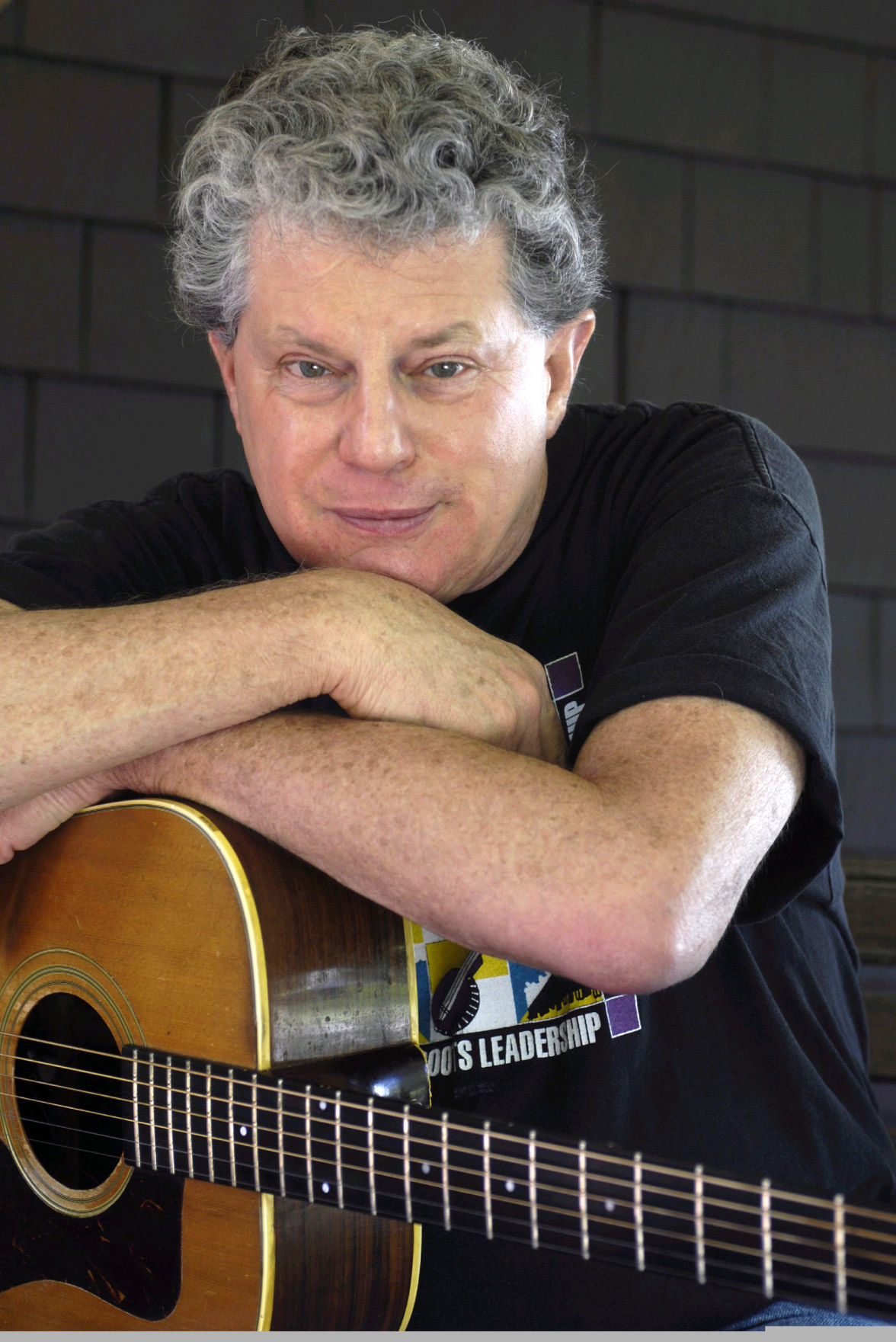
Woody Guthrie’s daughter recruited singers to record his unheard songs decades after his death.
Si Kahn, another folk singer and political activist, decided not to wait that long.
“I thought, ‘I wonder if can get some of the artists I think are extraordinary to do albums of my unrecorded songs,’” Kahn, 74, said from his home in Charlotte.
 The first artist he approached, Joe Jencks, 46, welcomed a chance to introduce more of Kahn’s songs to the world. The two of them will perform together Friday, Dec. 7, at Muddy Creek Music Hall in a concert presented by the Fiddle and Bow Society.
The album that resulted from the pairing is called “The Forgotten: Recovered Treasures from the Pen of Si Kahn.” Jencks, an Illinois native based in Chicago, recorded the album in Toronto and released it earlier this year.
Elizabeth Szekeres wrote about “The Forgotten” for the website Roots Music Canada: “On this lovely album of great American songs sung by one of America’s best male voices, we have a plethora of fantastic Canuck musicians … These great songs are forgotten no more.”
The album title refers both to the previously unheard songs and to the people Kahn wrote about: millworkers, refugees, miners, victims of gun violence. Several of the songs are union stories and anthems, reflecting the work Kahn has done for unions on behalf of textile workers, musicians and other tradespeople. “ I Have Seen Freedom Being Born” recounts Kahn’s history with the civil rights movement, while “Why Are the Guns Still Firing” shows his reaction to the 2015 church shooting in Charleston, S.C.
“There was quite a diversity of styles of songs,” Jencks said from a tour stop in Seattle. “The ones that really grabbed me were the ones that were these narrative pieces that gave the listener some insight into the lives of people that they didn’t have before listening to the song. And that was really the focus of what I chose.”
Jencks released his debut album in 1995. He was a member of the trio Brother Sun earlier this decade, releasing three albums with that group. One of the songs he wrote and recorded with Brother Sun, “Lady of the Harbor,” was the No. 1 single on the Folk DJ chart in 2013 and has become a latter-day folk standard. Jencks’s most recent solo album featuring his own material, “Poets, Philosophers, Workers and Wanderers,” came out in 2017.
He got to know the producer of “The Forgotten,” Ken Whiteley, when both men worked on the executive board of Local 1000, a branch of the American Federation of Musicians that represents touring performers. Whiteley has a state-of-the-art home studio in Toronto. (Parents may recognize his name as the longtime producer and band leader for Raffi, the children’s singer.)
A group of Canadian musicians backed Jencks on “The Forgotten,” including Frank Evans on banjo and John Showman on violin. Jencks sang lead and harmony vocals and played guitar and bouzouki. Whiteley contributed mandolin, piano, organ, vibraphone, acoustic guitar, electric guitar, accordion and vocals.
“That’s part of the joy of working with Ken,” Whiteley said. “If you say, ‘I need a little accordion here,’ he can sprinkle some on without having to go out and find an accordion player. If you’re putting a stew together and you want to sprinkle a little bit of this or a little bit of that on, Ken is diverse enough as a musician that he can just say, ‘Well here, let’s do this.’”
‘Joyful moments’
Jencks originally planned to record only a song or two of the more than 70 demo recordings Kahn shared with him. But the more he listened, the more his interest grew.
“Si did me a real solid, because he handed me a whole batch of stuff that I could sift through and weave through,” Jencks said. “I could build a narrative that I wanted to build out of his work, which is people living their lives and doing their work. There is an activist undercurrent to what’s there, but it’s not in the sense of telling others how they should behave, what they should do. It’s simply in the process of bearing witness to lives that have been lived.”
The album was created with minimal input from Kahn beyond supplying the songs. He trusted Jencks to make good decisions, though Jencks did get Kahn’s permission to make some small changes to the music and lyrics on some songs.
The two men listened to the finished product while driving around in Jencks’s car, an experience Jencks described as “one of the more joyful moments of my life as an artist.”
“We had to stop at the end of every song, because he was gobsmacked,” Jencks said. “We’d talk about the arrangements; I’d talk about the stories. He’d tell me more stories about the reason why he wrote the song, who he wrote it for — stuff that he had not shared with me earlier.”
Kahn has not released an album under his own name since 2013. That was the year his 18th record, “Bristol Bay,” came out. In the era of digital streaming, he has found it nearly impossible to recoup the cost of creating an album.
“I realized about four or five years ago that I can’t financially afford to make CDs,” he said. “If I want to lose that much money, I can just write you a check.”
Still busy
Don’t assume Kahn hasn’t been busy, though. He has retired from full-time union work, but he has a long list of music projects in the works. One is a musical, “Mother Jones in Heaven,” about Mary G. Harris Jones, the Irish-American teacher and dressmaker who fought against child labor and cofounded the Industrial Workers of the World. It will open Jan. 10 at the Warehouse Performing Arts Center in Cornelius, N.C., for a two-week run.
Kahn also plans to release a series of news albums in 2019 to mark his 75th birthday. Current plans include:
A cast album for “Mother Jones in Heaven.”
“Cackalacky: A Tribute to the Great North State,” an album collaboration with Americana veteran Jim Lauderdale, a graduate of the UNC School of the Arts.
An album by traditional artists Saro Lynch-Thomason and Sam Gleaves showcasing Kahn’s songs about women.
“The Far Si,” a collection of Si’s funny, whimsical songs.
A second album of Kahn’s songs by the Looping Brothers, a German bluegrass band that released an earlier collection of Kahn songs in 2013 called “Aragon Mill: The Bluegrass Sessions.”
The tour that will bring Kahn and Jencks to Muddy Creek this weekend represents a rare extended stretch of shows for Kahn. They have played about 25 shows together to date, he said.
“The musical bed is there,” Kahn said. “It is rich, is is creative, and you just lay down and enjoy singing and playing.”
Doug MacLeod is known for his superb songwriting, guitar wizardry, warm soulful vocals, wit and unforgettable live performances. At the heart of a Doug MacLeod performance is his knack for storytelling, bringing characters-from the faceless to the legendary-to strikingly real life. Each song extremely personal and at the same time, universal; covering subjects topical, humorous, and soulful; from the satirical to the sublime.
He is the winner of the 2017 Blues Music Award for Acoustic Artist of the Year, as well as multiple Blues Music Awards, including the 2016 Acoustic Artist Of The Year, the 2013 Blues Blast Music Award for Male Artist Of The Year.
MacLeod’s playing landed him sideman gigs with George ‘Harmonica’ Smith, Big Joe Turner, Pee Wee Crayton, Eddie ‘Cleanhead’ Vinson, Lowell Fulson and Big Mama Thornton. Over 30 years, 21 studio albums, several live records, compilations, a blues guitar instructional DVD and a live performance DVD, MacLeod has consistently earned raves. His songs have been covered by many artists including Albert King, Albert Collins, Joe Louis Walker and Eva Cassidy. MacLeod’s songs have been featured in many TV movies and the hit show In the Heat of the Night. August Wilson requested his soulful slide guitar playing in the Los Angeles opening of “Gem of the Ocean”.
From 1999 to 2004 Doug hosted Nothin’ But The Blues, a very popular weekend blues show on Los Angeles’ KLON-KKJZ. He has also been the voice for The Blues Showcase on Continental Airlines. For ten years he penned “Doug’s Back Porch,” a regular feature column in Blues Revue Magazine in which he shared his humorous and insightful stories with thousands of readers. He is one of the four featured artists in the movie “Resonate: A Guitar Story”, the feature documentary on the making of National Guitars.
“MacLeod is an American original as his songs; storytelling style, and soulful vocals are mesmerizing… highly recommended listening.”
– Richard Ludmerer, Making A Scene!
“Like all great blues men, MacLeod lives his music, and the songs are not just on the tips of his fingers and tongue, they are one with his being.”
– Blues Music Magazine


